
Extending a lease should be approached in the same way as signing a new contract and be preceded by a thorough analysis of operational needs, technical parameters and costs, says Jan Olszewski, Senior Advisor, Industrial and Warehouse Department, Newmark Polska.
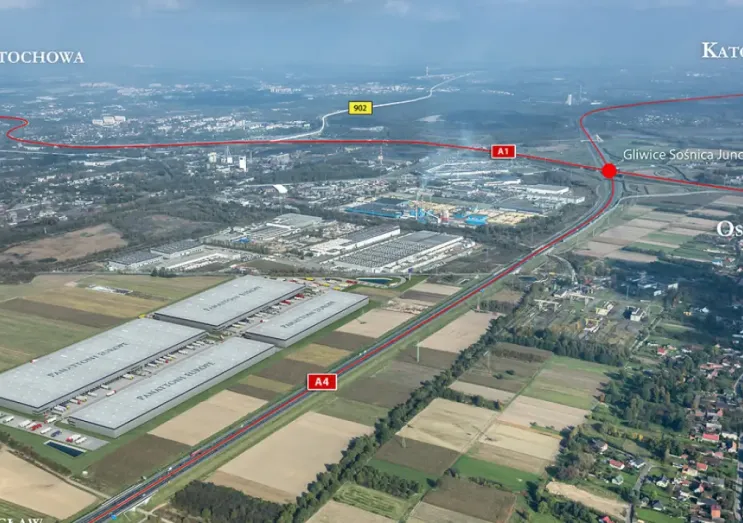
Market data confirms this shift. In 2025, lease renegotiations accounted for over 50 per cent of total industrial take-up, up from 41.85 per cent the previous year. The scale of this phenomenon varies by region, however: Upper Silesia recorded the highest share of renewals, exceeding 70 per cent, while renegotiations in Łódzkie and Greater Poland rose to nearly 60 per cent.
“This signals that the market is entering a phase of greater maturity, with fewer expansions and a growing focus on occupancy optimisation,” explains Jan Olszewski. “Total warehouse and industrial stock surpassed 36.5 million sqm last year. Many companies – both global brands with a long-term presence in our market and Polish firms – have already gone through several relocation and expansion processes. Their experience now translates into more informed decision-making and a clearer definition of occupier needs.”
There is choice – but not everywhere
A lack of alternatives is no longer a factor driving tenants’ decisions to stay in their current locations, and limited choice is now confined to only a few local markets. At the national level, the situation remains balanced despite a slowdown in new completions. Average vacancy rates across Poland stand at between 7 and 8 per cent, which in most cases still allows companies to find warehouses that meet their specific operational needs. Good examples include Upper Silesia and Greater Poland, where vacancies exceed 8 per cent and the share of renegotiations ranks among the highest in the country.
Why do companies stay?
“Despite the availability of space, many tenants are reluctant to relocate from well-established facilities they chose for their proximity to strong road infrastructure and access to an experienced workforce. That’s why some companies planning to move first look for options in nearby industrial parks,” explains Jan Olszewski. According to the expert, relocating a warehouse by as little as 10 km may cause commuters to change jobs. Companies understand that the loss of experienced staff, recruitment costs and the time required for onboarding often outweigh even savings from lower rent.
Firms that choose to stay in their current warehouse do so because it represents real operational value, not just a point on the map. “The better a warehouse is adapted to a tenant’s specific processes, the more likely the tenant is to remain. This is especially true for facilities with many bespoke adaptations, extensive technical installations and significant tenant investments. In such cases, relocation would entail not only a major logistical effort but also the loss of prior investments,” says Jan Olszewski.
The advisor at Newmark Polska also points out that relocation always comes with additional costs such as restoring a facility to its original condition, dismantling and moving infrastructure, reinstalling systems and reorganising operations. “On paper, a new warehouse may look more attractive in terms of costs, but when you add up all the expenses, the balance is not always in favour of moving,” says Jan Olszewski. “This does not mean that relocations never make sense. Modern technologies are making new facilities increasingly attractive. Greater energy efficiency, eco-friendly solutions, modern infrastructure and higher-quality office suites in the newest buildings provide significant added value, especially for companies planning to invest in automation or make changes to their operational model.
Final decisions are also increasingly influenced by service charges. “Tenants analyse not only their level but also building management systems and the transparency of settlements. This is where advisors play a key role, helping to accurately estimate the actual total cost of relocation compared with the stay option,” adds Jan Olszewski.
Numbers before decisions
Deciding whether to stay in a warehouse or relocate operations to a new site requires time, reliable data and a comparison of realistic market scenarios. Accordingly, advisor at Newmark Polska recommends starting renegotiations about 12–18 months before lease expiry. “This timeframe allows tenants to operate comfortably and complete the entire decision-making process without time pressure. The starting point is a review of current operations and costs to determine whether the existing space still supports the company’s business and growth plans. It is also worth exploring market alternatives, even if the base scenario is to remain in the current facility. This approach enables tenants to fully assess their negotiation position and the scope of potential concessions,” says Jan Olszewski.
The expert explains that in practice this means comparing and going through several realistic options step by step. Factors to consider include not only rental rates and adaptation costs, but also labour and relocation costs, service charges and potential risks to daily operations. “The advisor’s role is to take all these factors into account and help choose solutions that truly make business sense. This forms the basis for making a shortlist of options before starting the actual negotiations of commercial terms and, subsequently, lease provisions,” explains Jan Olszewski.
What makes it onto the negotiation table?
For tenants, full alignment of lease conditions with current business needs is essential, and rent is just one piece of the larger puzzle.
“In practice, the topics most often discussed at the negotiation table include the scope and financing of adaptation works and Above Standard Tenant Improvements (ASTIs), rent indexation rules, service charge amounts and settlements, and financial incentive structures,” says Jan Olszewski. According to the expert, technical considerations also play an increasingly important role. Tenants renegotiate the scope of building upgrades, space refurbishments, floor improvements and the possibility of installing new machinery and production lines. In many cases, these issues determine whether a lease is renewed, as they allow tenants to adapt their existing warehouse to evolving processes and avoid a costly relocation.
Lease length remains a key factor influencing commercial terms. The longer the lease, the more willing landlords are to offer concessions – both in terms of rent, incentive packages and the scope of improvements. “That’s why break option clauses are relatively rare. A five-year contract with a break option after three years is effectively treated as a three-year deal by landlords, and this is how it is assessed in terms of risk and the conditions offered,” explains the expert from Newmark Polska.
Is this a new phase for the industrial market?
Lease renewals have always been part of the market, but today they play a far greater role and this trend is expected to intensify in the coming years. “Renegotiations are no longer just a response to temporary market turbulence; they are increasingly becoming a natural part of managing lease portfolios. At the same time, with modern warehouse facilities offering higher energy efficiency, advanced technologies and greater operational flexibility, new projects continue to play a major role in tenant decision-making. In today’s climate of uncertainty and economic volatility, informed planning, a deep understanding of local markets and expert advisory support are essential for crafting optimal strategies for both renegotiations and relocations to new facilities. A professional advisor can help turn leasing decisions into a practical tool for optimising costs and driving sustainable business growth,” adds Jan Olszewski.