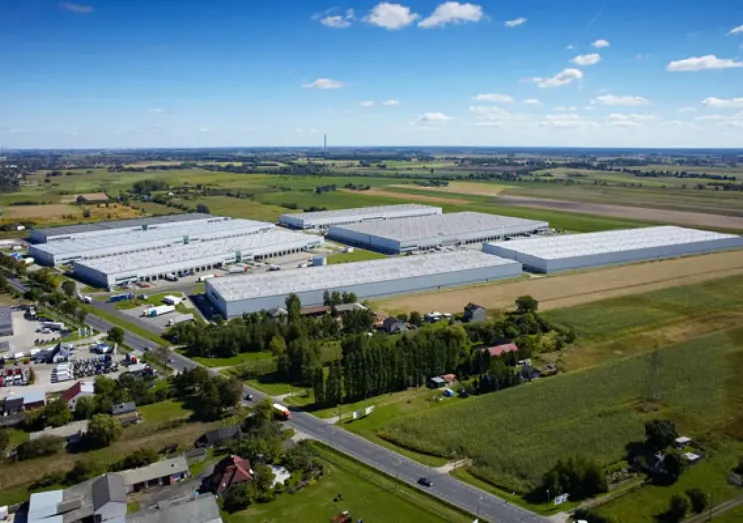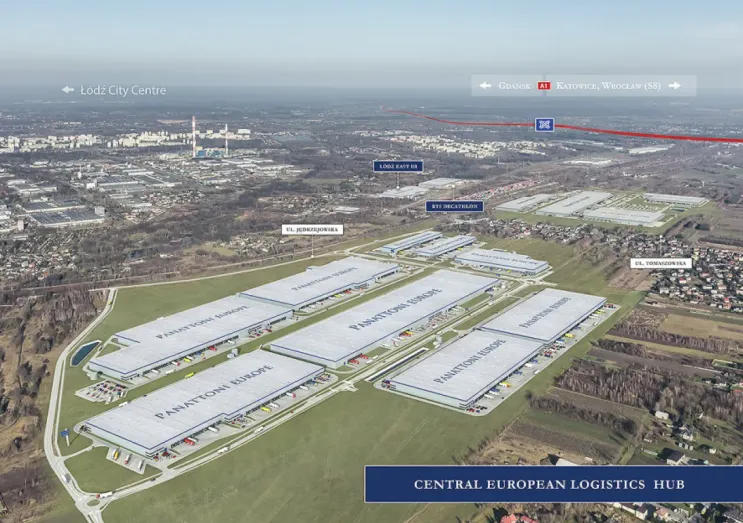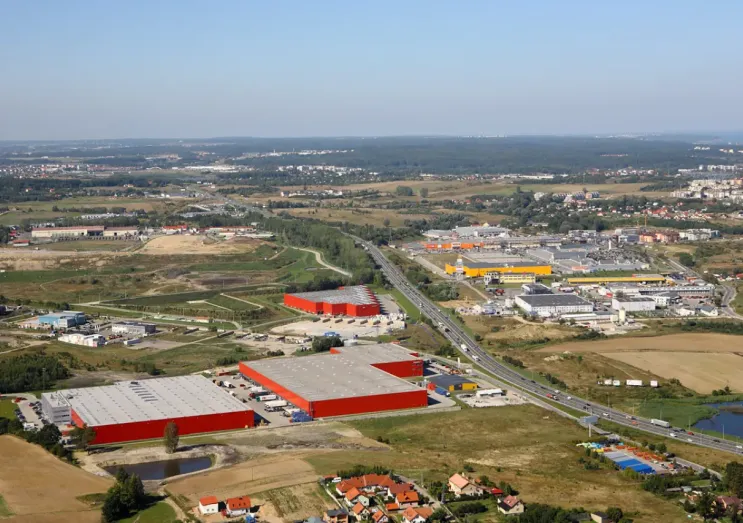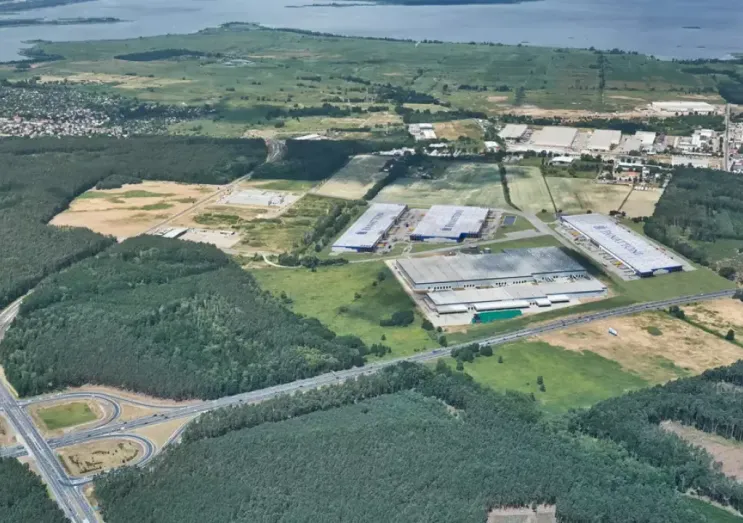

Poland currently boasts more warehouse stock than the Czech Republic, Romania and Hungary combined, while remaining one of the most cost-effective logistics markets in the region. Its robust road, rail and seaport infrastructure enables deliveries to reach a significant portion of Europe within 24–48 hours. Thanks to this combination of scale, cost efficiency, transport connectivity and operational expertise, Poland is increasingly becoming the top choice for companies expanding their warehousing, manufacturing and distribution operations in Europe.
While the warehouse market across Central and Eastern Europe is expanding rapidly, Poland remains the benchmark for tenants evaluating locations in the region. The country stands out for both its market size – 37.4 million sqm of modern warehouse space – and its rapid pace of growth. By comparison, the Czech Republic, Romania, Hungary, Slovakia and Bulgaria have a combined warehouse stock of approximately 35.3 million sqm. Poland alone accounts for nearly half of CEE’s total warehouse stock, currently estimated at 80 million sqm.
Poland combines scale with competitive costs
“At the same time, Poland remains one of the most cost-competitive warehouse markets, with average monthly base rents ranging between EUR 4.2 and EUR 5.2 per sqm. Rents are still significantly lower than in most CEE countries, particularly compared with the Czech Republic, Hungary and Slovakia. In terms of leasing costs, Poland’s closest competitor is Romania,” says Michał Rafałowicz, Regional Director, Newmark Polska. Rafałowicz notes that the pace of market growth is equally critical. Over the past three years, Poland has brought the largest volume of new warehouse space to market in the region while successfully maintaining competitive leasing prices. Few markets today can successfully combine this level of growth with stable costs.
Over the last three years, warehouse completions in Poland totalled more than 7.5 million sqm, significantly outpacing many other countries in the region. For instance, completions reached nearly 2.6 million sqm in the Czech Republic and just over 1.4 million sqm in Romania. “Poland’s leadership position is driven largely by developers who secured large land banks at attractive prices years ago. Today, they can concentrate on development. This operational model was pioneered in Poland and is now being replicated across other European markets,” says Kaja Karbowska-Nowak, Associate, Industrial and Warehouse Department, Newmark Polska.
Meeting the new needs of tenants
Occupier expectations are evolving. Driven by the growing importance of supply chain security, companies are increasingly seeking locations that support more predictable and resilient logistics networks. “For many businesses, Poland serves as a natural gateway to the European market of approximately 450 million consumers. The country’s distribution hubs now increasingly serve both Western and Northern Europe,” says Rafałowicz.
Against this backdrop, Western Poland is gaining strategic importance as a logistics base for Germany. “Amid severe land constraints and a highly restrictive approach to new developments in Germany, rents there are soaring, prompting some logistics operations to shift eastwards. The rental disparity is striking: effective rents hover around EUR 3 per sqm in Poland’s Lubuskie region, compared to over EUR 7 per sqm in Berlin,” explains Rafałowicz. “More than a decade ago, infrastructure deficits hampered Poland’s competitiveness relative to Western Europe. Today, however, the country offers a combination of state-of-the-art transport networks and cost competitiveness.”
Faster deliveries across Europe
Poland’s central position between Western and Eastern Europe has long been a cornerstone of the country’s logistics sector. This advantage is being further reinforced by infrastructure projects: the development of TEN-T corridors, the construction of new routes such as Via Carpathia and the expansion of rail networks and intermodal terminals, including the terminal in Małaszewicze, one of the primary transloading hubs on the trade route between Asia and Europe.
“The choice of warehouse location is also being significantly driven by Polish seaports, which are steadily expanding their throughput. A good example of this trend is the growing presence of Danish companies, which are increasingly establishing their hubs in Poland to serve regional markets while relying on road transport through Germany,” says Kaja Karbowska-Nowak.
Capitalising on the competitive advantages of the country’s geographic location and highly developed logistics infrastructure is precisely what drove NRF – a Netherlands-based supplier of automotive aftermarket parts and industrial cooling solutions – to choose Poland. “The decision to expand our operations and lease new production and warehouse space in Gdańsk was a natural step in our group's long-term strategy,” says Zbigniew Ruba, Commercial Director Aftermarket, NRF. “As a company with a history spanning nearly 100 years, we evaluate infrastructure through the lens of decades rather than one-off projects. Thanks to Poland's well-developed network of transport corridors, we can seamlessly serve multiple markets from Gdańsk, successfully combining our manufacturing, warehousing and office functions under one roof.”
Scale delivers greater flexibility
Poland’s prominence in the regional warehouse market also stems from the sheer volume of available stock and the presence of leading global developers. This translates into a vast array of options for tenants – ranging from Build-to-Suit (BTS) projects to urban depots and big-box logistics centres capable of serving multiple markets simultaneously.
“A highly developed warehouse market enables tenants to manage their footprints flexibly and scale their operations as their business grows. Over time, companies often require additional space while remaining tied to long-term lease agreements. In these scenarios, large developers can offer relocation to another facility within their existing property portfolio, eliminating the need to wait for the lease to expire. This is an advantage provided almost exclusively by large, mature markets,” explains Rafałowicz.
Another advantage is the framework of investment incentives within the Polish Investment Zone. “In many countries, special economic zones are restricted to isolated geographic areas. In Poland, the investment support system covers the entire country, allowing investors to benefit from the same regulatory rules irrespective of project location. The only variable is the level of public aid available, which depends on a region’s development potential. This provides investors with significant predictability when planning projects,” says Kaja Karbowska-Nowak.
Flexibility and expertise support growth
The choice of location is increasingly driven by a company’s ability to launch and expand operations quickly. “Many developers possess ready-to-build land banks with all the necessary planning permissions in place. As a result, it typically takes just eight to ten months from breaking ground to the handover of a completed warehouse. In practice, this means that when supporting tenants with their expansion plans, we can recommend available sites and tailor solutions to their operational requirements within a short timeframe. This level of space availability and development readiness is still lacking in many other countries across the region,” says Kaja Karbowska-Nowak.
The expertise developed in one of Europe’s largest logistics markets is also relevant to multinational companies. “Given the scale of its market, Poland boasts a highly skilled and experienced workforce. For many years, the country has served as a logistics hub for a large portion of Europe, which is why today we can offer such extensive operational know-how,” says Michał Rafałowicz. “Another strength is Poland’s strong education system. Technical universities, traditional universities and vocational schools consistently produce specialists who meet the needs of companies across a wide range of industries.”
For NRF, the availability of highly skilled technical talent was one of the primary drivers of its expansion in the Tricity area. “Engineering expertise is particularly pivotal in the automotive industry, where automation, quality assurance and advanced production processes play an increasingly critical role. Access to skilled engineers and technical specialists enables us to develop modern operations, drive innovation and maintain the high-quality standards which are essential for global manufacturers,” says Zbigniew Ruba, NRF.
Maintaining the competitive advantage requires new investment
Newmark Polska experts note that Poland’s currently strong position cannot be taken for granted. With labour costs and energy prices on the rise, alongside competition from Romania and the Balkan countries, the nation’s long-term attractiveness will depend on new factors.
“Energy availability is becoming an increasingly critical priority. Investors expect not only sufficient grid connection capacity and modern transmission infrastructure, but also access to renewable energy, energy-efficient building solutions and battery energy storage facilities. Adequate energy infrastructure will be essential for supporting future growth. At the same time, Poland remains one of the key beneficiaries of the transformation of European supply chains, possessing all the attributes needed to maintain its strong position within the European logistics landscape,” says Michał Rafałowicz.