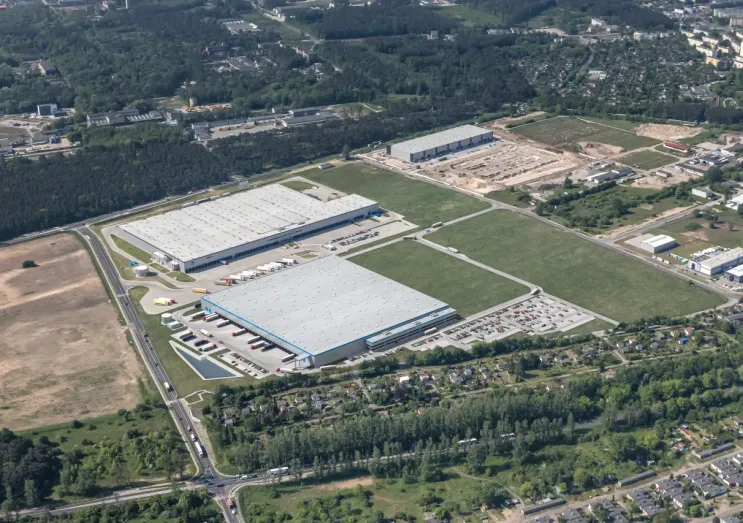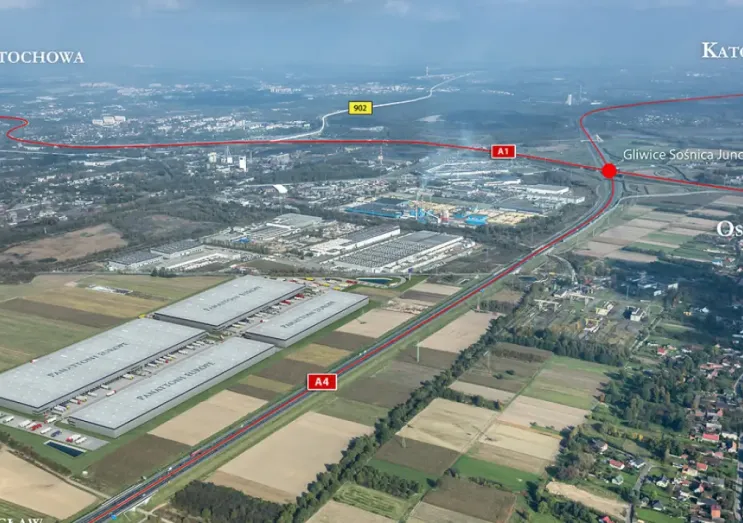

An increasing number of companies are relocating office teams to warehouses and manufacturing plants, driven by the need for cost savings, better communication and a more consistent working environment. The consolidation of functions in a single location also reduces distance – both physical and in terms of decision-making.
The primary catalyst for office development within industrial parks is the need to optimise costs. Faced with mounting cost pressures, companies are meticulously reviewing their budgets and seeking opportunities to generate savings across all departments.
“Differences between locations are significant. For instance, monthly rents commanded by Class A office buildings in central Wrocław reach EUR 13.50–17.00 per square metre, compared with EUR 12.00–13.00 for office space in logistics parks on the outskirts. Additional savings come from service charges: PLN 24–30 per square metre in office buildings versus PLN 7–10 for office space in warehouses,” says Anna Domańska, Regional Director, Newmark Polska. Total occupancy costs are also influenced by parking. The parking ratio in office buildings is usually one space per 60–100 square metres, with monthly fees ranging from EUR 50 to EUR 150 per bay. By contrast, big-box facilities offer employees and contractors far more surface parking spaces at no additional cost.
Comfort over address: What do employees say?
The rapid expansion of the logistics and e-commerce sectors has changed how offices in industrial parks are perceived. Moving away from serving solely as administrative outposts, these workspaces are increasingly becoming an integral part of corporate employer branding strategies.
While such industrial locations have historically been associated with limited access to urban infrastructure, findings from Randstad’s latest Workmonitor report reveal that modern employees prioritise a comfortable working environment and time savings over a central location.
“The lack of cafés or gyms in the immediate vicinity is offset by on-site amenities such as subsidised meals, breakout areas, showers and bicycle shelters. Parcel lockers and mobile service points are also standard features in the market,” says Anna Loc, National Sales and Key Account Manager at Randstad Polska. According to a survey carried out by the company last year, convenient location and ease of access consistently rank among the top 11 factors driving job choices.
“Free parking spaces play a vital role in logistics parks, particularly for commuters travelling from outside metropolitan areas. More companies are also co-funding private shuttle bus services to connect employees from nearby towns, which is becoming a significant recruitment advantage in tight labour markets,” says Anna Loc. The proximity of offices to warehousing operations is also valued by management, as it fosters team communication and collaboration, with companies operating under one roof reporting lower turnover among logistics managers.
Consolidation has its limits
The growing importance of placing offices close to warehouses goes hand in hand with a broader consolidation trend. Companies are increasingly reducing their urban footprints, relocating departments to single sites and integrating office activities with on-site operations. This leads to simpler management structures, faster decision-making and greater control over day-to-day processes compared with a dispersed corporate model.
“However, this is not a one-size-fits-all solution. Organisations operate under different business models and at various stages of growth, meaning location decisions require an individual assessment of costs, employee requirements and the nature of the business,” notes Patrycja Prycik, Business Development Coordinator, Newmark Polska.
In practice, offices adjacent to warehouses typically accommodate teams supporting in-warehouse operations such as logistics, sales, returns management and quality assurance. While some companies choose to relocate their entire offices, others opt for a hybrid model, retaining selected departments, such as marketing and accounting, within cities.
“Locations outside metropolitan areas are not always attractive to specialists, which ultimately limits the extent of full office consolidation and forces companies to make informed decisions about which teams to relocate and which to keep in urban locations. When advising our clients, we jointly analyse not only costs, but also employee needs and local talent availability,” says Anna Domańska.
The approach to office location and function is also shaped by industry specifics. “Manufacturing and e-commerce companies are placing greater emphasis on the quality of the working environment provided to their specialists. This shift is driving higher expectations regarding location, transport links and office standards. Meanwhile, logistics firms typically require smaller office footprints and focus primarily on maximising operational efficiency,” says Patrycja Prycik.
Higher standards, inherent constraints
Modern offices within logistics parks are increasingly matching the specifications of Class A buildings. They are often developed on a built-to-suit basis, offering flexible layouts and features such as raised access floors.
“At the same time, the specifications of industrial facilities continue to impose certain limitations. Offices with panoramic views from the eighth or tenth floor are simply not an option, as modern warehouses rarely exceed two or three storeys in height. Limited access to natural daylight also remains a challenge, although some developments are addressing this by incorporating dedicated office annexes. Additionally, for some corporate occupiers, the lower prestige historically associated with industrial locations remains a drawback compared with offices in city centres,” says Anna Domańska.
Office space in these developments is usually closely integrated with the warehouse to serve a supporting function. In lease agreements spanning five years or more, office allocations typically account for up to 10 per cent of the total leased area. In practice, this translates into approximately 1,000 sqm of office space for every 8,000 sqm of warehouse space.
“Developers rarely build larger office modules in standard projects, as they are more costly to deliver and carry a higher risk of remaining vacant once a tenant’s lease expires. That’s why larger corporate offices are typically developed on a BTS basis for a specific occupier committed to a long-term lease,” explains Domańska.
SBUs: office and warehouse operations on equal footing
Small Business Units (SBUs) effectively complement the market offering, catering specifically to companies seeking smaller warehouse footprints with a substantial office component.
“In many organisations, employees from sales, laboratory and R&D teams, as well as production managers require direct access to the warehouse floor. Warehouse facilities are no longer used solely for storage; they also support repairs, assembly, light manufacturing, research and prototyping. This model fosters collaboration between office-based and operational staff while eliminating time-consuming travel between far-flung locations,” says Andrzej Dużyński, CEO, Ideal Idea.
A major competitive advantage of SBUs lies in their location. While situated on the outskirts of large cities, they offer access to infrastructure and amenities comparable to those found in central business districts. “What matters to tenants is not just functionality, but also the quality of office space and the visual appeal of buildings. Occupiers attach great importance to premium façades and landscaped green areas. The windows in our developments are 2.70 metres high, fully aligned with modern office standards. In addition, an increasing number of our two- or three-storey complexes are equipped with passenger lifts to improve accessibility for all users, including people with disabilities,” Dużyński adds.
Balancing cost savings and work organisation
The consolidation of operational and administrative functions – across both logistics parks and Small Business Units – is expected to gain significant momentum, largely driven by cost pressures and optimisation opportunities. However, this transition is far from a universal, one-size-fits-all solution. “The key factor is a comprehensive approach and a thorough analysis that enables organisations to tailor solutions to their specific needs, without compromising operational efficiency or workplace quality. Every decision requires a bespoke strategy and careful consideration of the individual company’s business circumstances,” concludes Anna Domańska.

In the photo, top row from left: Anna Domańska, Regional Director, Newmark Polska; Andrzej Dużyński, CEO, Ideal Idea. Bottom row from left: Anna Loc, National Sales and Key Account Manager at Randstad Polska; Patrycja Prycik, Business Development Coordinator, Newmark Polska.